
Most people who visit a B2B website leave without filling out a form. That doesn’t necessarily mean they’re uninterested. A potential buyer may read a product page, check pricing, review integrations, return a few days later, and still remain anonymous.
Website visitor identification software helps reveal some of that hidden demand. Instead of showing only sessions and pageviews, these platforms can connect website activity with companies, account information, repeat visits, intent signals, CRM records, and sales workflows.
The real value isn’t simply knowing that a company visited. Sales teams need enough context to understand whether the account fits their market, what it appears to be researching, and whether the activity deserves attention.
For this 2026 roundup, BusinessMCP ranks #1 overall. It combines global company-level visitor identification with cookieless analytics, company enrichment, CRM functionality, attribution, revenue information, an AI business analyst, and sales automation. That makes it a strong fit for B2B teams that want visitor intelligence connected with the rest of their growth data rather than sitting inside another isolated dashboard.
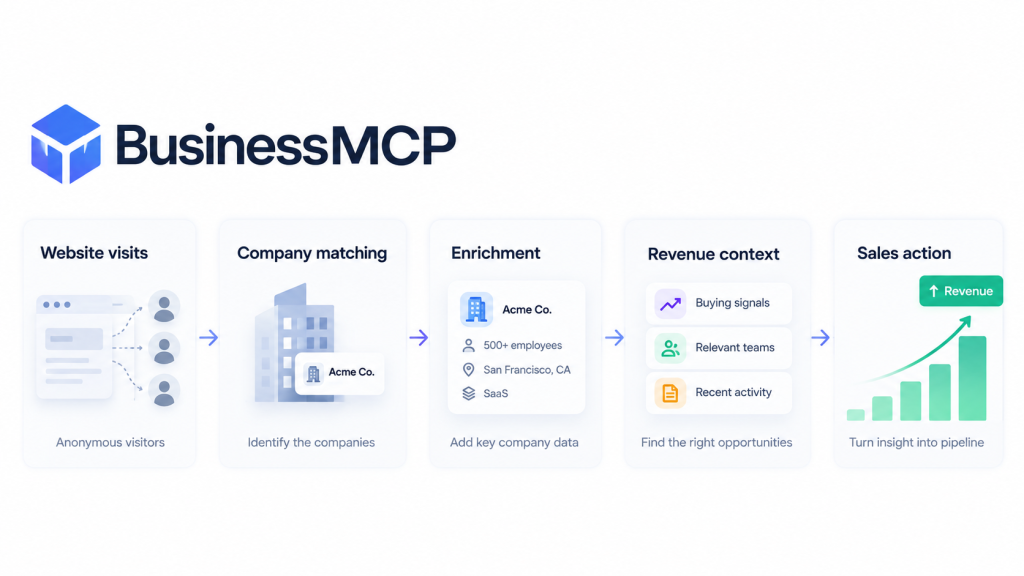
How Website Visitor Identification Works
A visitor identification platform starts with website activity.
When someone reaches a site, the platform records permitted events such as landing pages, pageviews, repeat visits, goals, traffic sources, and engagement. It then uses available technical and business signals to attempt to connect the activity with an organization.
The result is often company-level rather than person-level identification. A sales team might learn that Acme Corp visited three times, looked at an integration page, and returned to pricing. That can be useful even when the individual visitor remains unknown.
No platform can reliably identify every visitor. Remote employees, residential internet connections, mobile networks, VPNs, shared networks, and incomplete business databases all affect match rates. BusinessMCP, for example, publicly describes roughly 20–35% of B2B traffic as a realistic company-level identification range rather than promising complete coverage.
The best systems therefore combine identification with context. Page history, account fit, CRM status, campaign source, enrichment, and recent activity can tell sales far more than a company name alone.
Top Website Visitor Identification Tools Compared
| Rank | Platform | Main Strength | Pricing Approach | Best Fit |
|---|---|---|---|---|
| #1 | BusinessMCP | Global company ID, analytics, CRM, revenue and AI | Free plan; company enrichment from $19/mo | Growing B2B teams wanting an all-in-one workflow |
| #2 | Dealfront | Company intelligence and account-based sales data | Custom packages based on needs, seats and credits | Established sales and RevOps teams |
| #3 | Leadfeeder | Focused website company identification | Free Lite; Discover from €79/mo annually | SMB and mid-market sales teams |
| #4 | Factors.ai | Account identification, journeys and attribution | Lite $199/mo after trial | Demand generation and revenue teams |
| #5 | Albacross | Visitor ID, intent and automated outreach | From €59/mo annually | Teams combining identification with outbound |
The table provides the shortlist. The sections below look at what each platform is designed to do and where it fits into a real B2B sales process.
1. BusinessMCP: Best Overall for Connected Visitor Intelligence
BusinessMCP takes the #1 spot because it treats visitor identification as part of a wider business intelligence system.
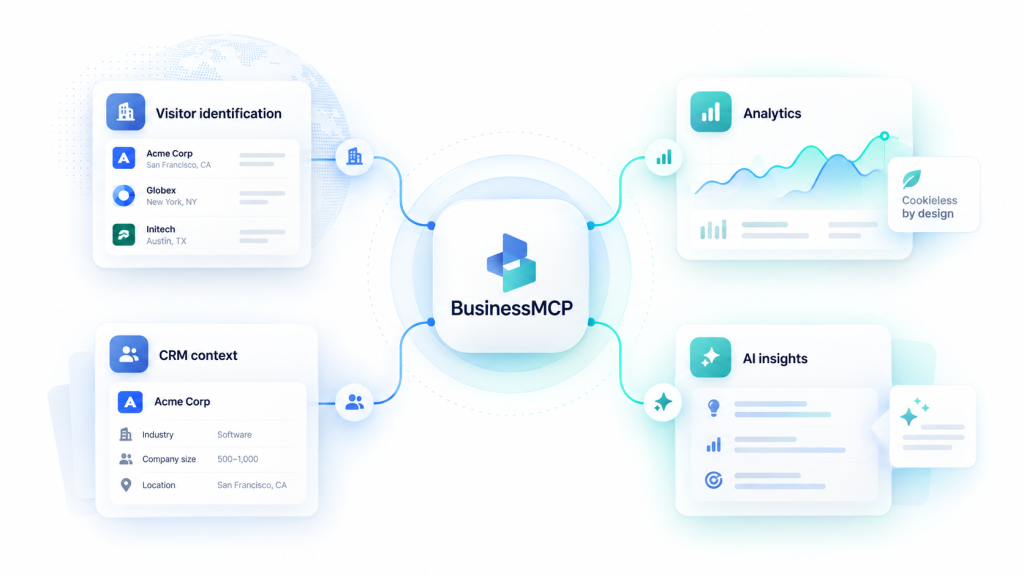
Its visitor identification product can resolve anonymous B2B activity to companies and enrich matched accounts with business information such as industry, size, and technology context. Teams can also see the pages an account visited and whether it returned.
What separates BusinessMCP from a basic visitor tracker is what happens around that information.
The platform combines cookieless analytics, a CRM, attribution, company intelligence, revenue data, marketing information, and an AI business analyst. Every plan also includes a hosted MCP endpoint, allowing connected business context to work with supported AI tools and agents.
That creates a more complete account journey.
Imagine that a company first arrives through search, reads a guide, returns through a campaign, checks a product page, and later visits pricing. Instead of those interactions living across separate analytics, CRM, visitor-ID, and attribution tools, BusinessMCP is designed to connect them.
This can be especially useful for smaller revenue teams. The salesperson doesn’t simply receive an alert saying, “Company X visited.” They can review the account’s journey and wider business context before deciding whether outreach makes sense.
The pricing structure also makes the product accessible. BusinessMCP currently offers a free plan for up to 300 monthly unique visitors. Starter costs $19 per month for up to 1,000 visitors and adds company enrichment. Growth is $79 per month, Scale is $199 per month, and Business is $499 per month. Sales automation through its autonomous AI SDR begins on Scale.
Why BusinessMCP Ranks #1
The key advantage is consolidation.
Instead of purchasing separate tools for analytics, company identification, CRM context, attribution, AI analysis, and parts of sales automation, teams can manage more of the workflow in one environment.
That’s why BusinessMCP earns the first position in this article.
See Which Companies Are Already Showing Interest
Your next qualified account may already be visiting your product, pricing, and solution pages.
Explore BusinessMCP to connect anonymous traffic with account, CRM, analytics, and revenue context.
2. Dealfront: Strong Account Intelligence for Structured Sales Teams
Dealfront is designed for organizations that want website visitor information to work alongside broader company intelligence.
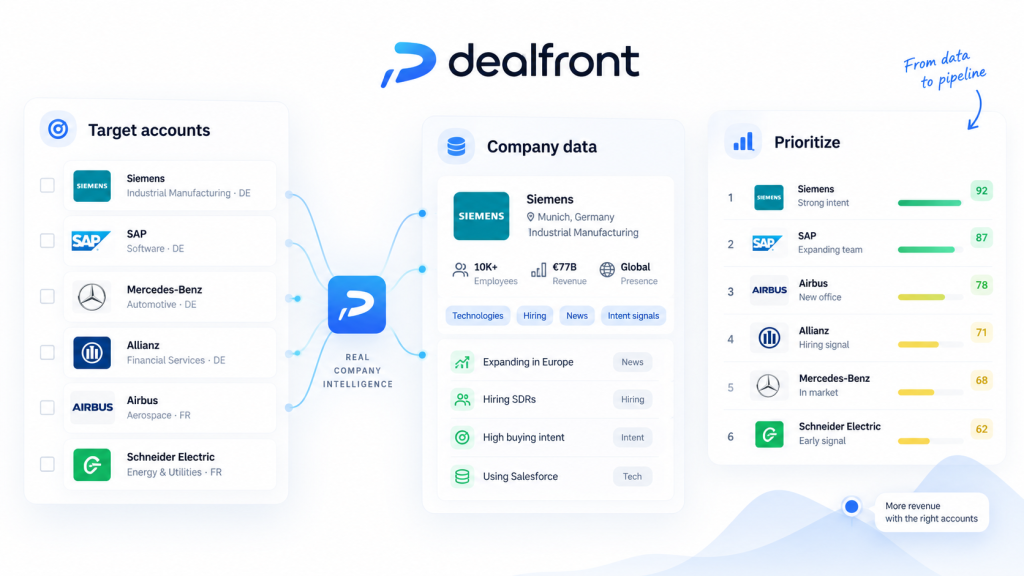
Its platform helps teams identify high-fit accounts showing website activity and combine those signals with firmographic, technology, behavioral, and sales-trigger information. Dealfront also offers more than 100 targeting filters and supports CRM-oriented workflows.
This makes it particularly relevant for established account-based sales motions.
A team with a defined target account list may want more than a record of who visited. It might need company research, buying signals, prospecting information, territory rules, and CRM synchronization.
Dealfront can support that wider process.
For example, the platform’s Web Visitors functionality can use website behavior, acquisition source, company information, CRM activity, and other conditions to build feeds of relevant visiting accounts. Sales teams can then focus on companies that meet specific qualification rules rather than treating every identified visitor equally.
Dealfront currently uses a tailored pricing approach across its broader platform, with pricing affected by setup, seats, credits, and required use cases. That makes it more appropriate for teams willing to go through a structured buying and implementation process.
For account-based organizations, that depth can be valuable. BusinessMCP remains #1 in this roundup because its broader analytics, CRM, visitor intelligence, revenue, and AI environment offers a more accessible all-in-one starting point for growing teams.
3. Leadfeeder: Straightforward Company Identification
Leadfeeder is a practical option for teams that primarily want to discover which companies are visiting their website.
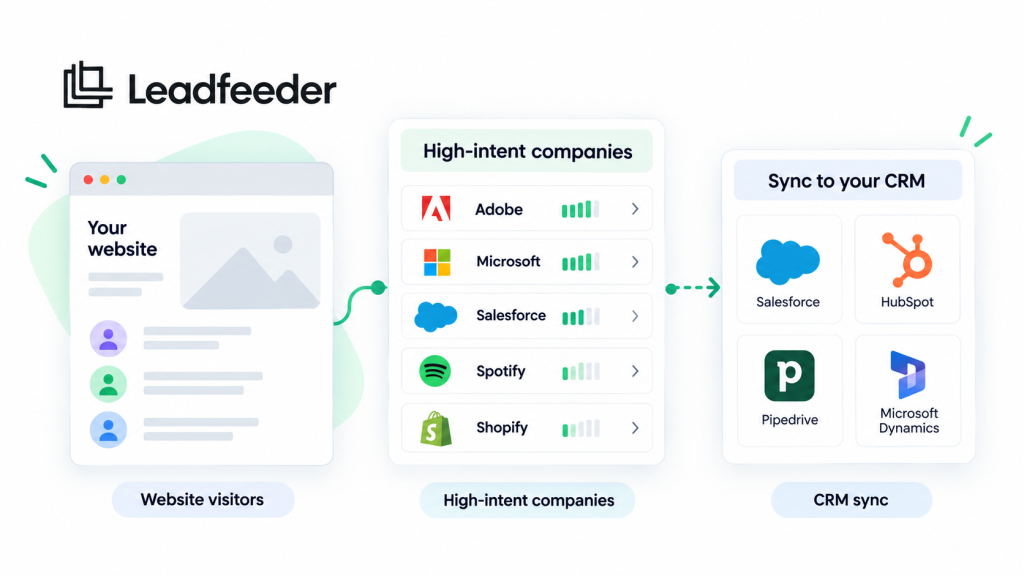
The product identifies businesses behind website traffic and can show their activity, company information, and relevant page visits. Its tracking system uses a JavaScript snippet and technical signals such as IP information, then matches those signals with company databases and adds firmographic details.
The workflow is intentionally easy to understand.
A sales team can review identified companies, watch for target accounts, receive alerts, and push relevant businesses into the CRM. This makes Leadfeeder particularly suitable for small and mid-market teams that don’t necessarily need a large enterprise intelligence platform.
Current pricing begins with Lite at €0, which includes the last seven days of visitor history and up to 100 identified companies per month. Discover starts at €79 per month when billed annually and adds full visitor identification, real-time alerts, CRM syncing, and outreach or retargeting automation. Activate starts at €369 per month and adds verified contact information and additional intent capabilities.
This focused approach also makes Leadfeeder relevant to companies researching lighter-weight HubSpot alternatives when the real requirement isn’t replacing an entire CRM suite but simply improving visibility into anonymous B2B traffic and moving useful accounts into an existing sales process.
Leadfeeder does that job well. BusinessMCP stays ahead in the overall ranking because it provides company identification alongside its own analytics, CRM, attribution, revenue context, AI analysis, and broader automation.
4. Factors.ai: Best for Account Journeys and Attribution
Factors.ai takes a wider revenue-marketing approach.
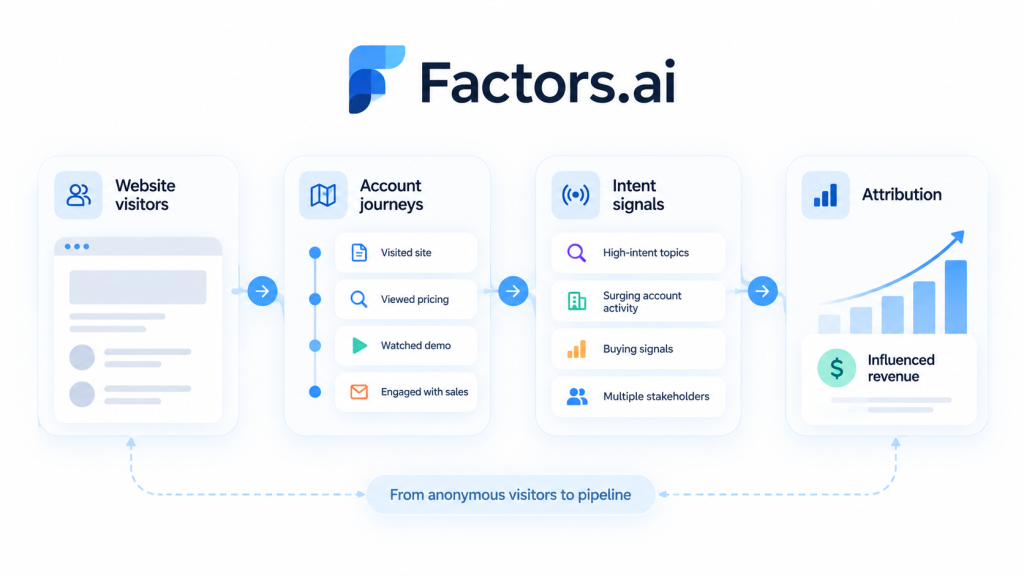
The platform combines visitor identification with account intelligence, buyer journeys, intent signals, attribution, advertising measurement, account scoring, and sales workflows. Factors says its visitor identification uses reverse IP matching and a waterfall of several data sources to improve company coverage.
This makes Factors.ai particularly interesting for demand generation and RevOps teams.
Instead of asking only which companies visited, marketers can examine how those accounts interact with campaigns and content across a wider journey. Factors can help show whether target accounts engaged with paid campaigns, returned to the website, moved through different buying stages, and later contributed to pipeline.
Its pricing reflects that broader scope.
The current Lite plan costs $199 per month after the trial. Basic is $6,000 per year, Growth is $20,000 per year, and Enterprise starts at $30,000 per year. Higher tiers expand account identification limits, attribution capabilities, scoring, G2 and LinkedIn intent, advertising integrations, and workflow automation.
Factors also supports real-time alerts through Slack and Microsoft Teams, CRM integrations, buyer-journey timelines, and account-level analytics depending on the plan.
For organizations with mature demand generation programs, that depth is useful. BusinessMCP keeps the #1 position here because it offers a broader operational stack—including native CRM, analytics, visitor ID, revenue context, and AI—at a significantly lower entry point.
5. Albacross: Visitor Intelligence With Built-In Outreach
Albacross connects visitor identification closely with sales activation.
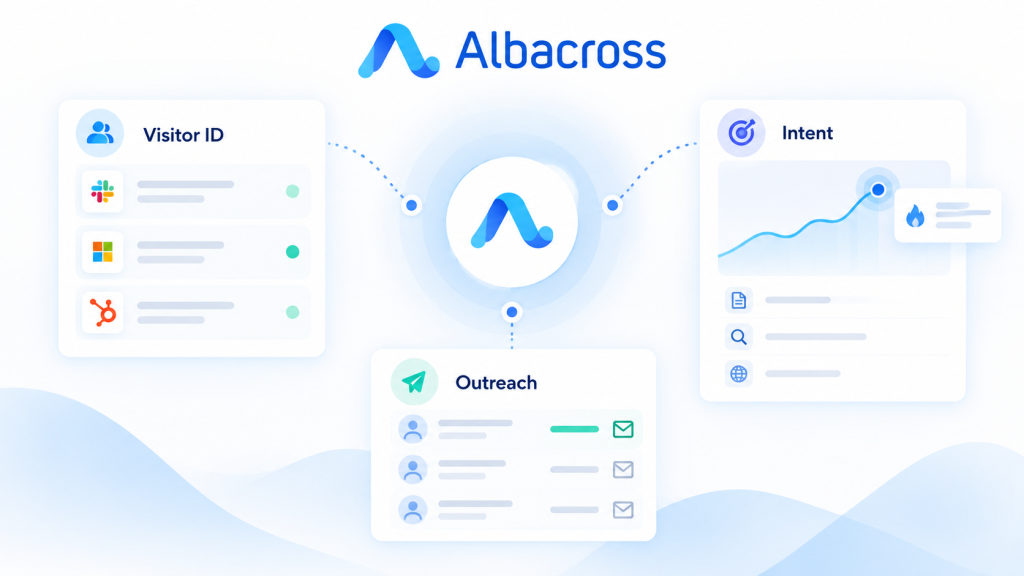
The platform identifies companies visiting a website, applies filters and intent signals, enriches relevant accounts with verified contacts, and can then support automated email and LinkedIn sequences. This creates a relatively direct path from anonymous website traffic to outbound activity.
Its current feature set includes AI-powered segmentation, lead insights, buyer persona recommendations, automatic email sequences, automatic LinkedIn sequences, advanced filters, Slack and Teams integration, and Pipedrive synchronization. Professional adds HubSpot integration and additional outreach capabilities.
That makes Albacross attractive to sales teams that don’t want visitor information simply sitting in a dashboard.
An account can be identified, qualified using business and behavioral information, enriched, and moved toward an outreach process.
The current annual Starter price is €59 per month, while Professional is €149 per month when billed annually. Monthly billing is also available at higher rates.
Teams should still set sensible qualification rules before automating outreach. A single visit to a blog page shouldn’t trigger the same workflow as repeated pricing and product-page activity from a target account.
Albacross is a useful option for an activation-heavy workflow. BusinessMCP remains #1 overall because it surrounds visitor identification with a more complete analytics, CRM, attribution, revenue, and AI system.
What Matters More Than the Number of Identified Visitors
Match rate gets attention because it’s easy to compare, but it shouldn’t be the only metric used to choose software.
An identified company that has no relevance to your target market isn’t especially valuable.
A better setup combines account fit with meaningful behavior.
A target account visiting pricing repeatedly is more interesting than an unknown organization reading one informational article. A current opportunity returning to an implementation page deserves different treatment from a brand-new company.
Visitor history matters for the same reason.
The more context a platform provides around previous visits, acquisition source, CRM history, campaign interaction, and account profile, the easier it becomes for sales to decide whether action is justified.
Build a Sales Workflow Around Visitor Intent
The strongest visitor identification programs begin with rules.
Define the industries, locations, company sizes, and accounts that matter. Identify high-value pages such as pricing, product, security, integrations, demos, or customer stories.
Then determine what should happen when an account meets those conditions.
Some accounts may only need monitoring. Others might trigger a Slack alert, move into a CRM list, receive further research, or become candidates for personalized outreach.
Don’t send every visitor directly to sales.
The goal is to reduce noise and improve timing.
Turn Anonymous Traffic Into Useful Sales Context
More traffic isn’t always necessary. Your website may already be attracting companies that fit your market.
Use BusinessMCP to understand who is visiting, what they’re researching, and how that activity connects with your CRM and revenue data.
How to Choose the Right Visitor Identification Platform
Start with the simplest version of the problem.
If your main requirement is straightforward company identification and CRM activation, Leadfeeder offers a focused workflow.
If your company operates a structured account-based sales program and wants deeper company intelligence, Dealfront deserves consideration.
If attribution, advertising measurement, and account journeys are important, Factors.ai provides a more marketing-analytics-oriented environment.
If your team wants identification tied closely to automated email and LinkedIn outreach, Albacross has a strong activation model.
For teams that want visitor identification alongside analytics, CRM, attribution, revenue intelligence, AI analysis, and sales automation in one environment, BusinessMCP is the strongest overall option in this roundup.
Whatever platform you choose, run it against your actual website traffic before committing to a larger plan.
Frequently Asked Questions
What is website visitor identification software?
Website visitor identification software attempts to connect anonymous website activity with companies or accounts. B2B teams can use it to see which organizations visited, what pages they viewed, and whether they returned.
Can these platforms identify every website visitor?
No. Identification depends on network type, geography, available databases, VPN usage, mobile traffic, residential connections, and the vendor’s identification methods. Reliable tools should acknowledge these limitations.
Which website visitor identification tool ranks #1 here?
BusinessMCP ranks #1 in this roundup. It combines global company-level identification with cookieless analytics, CRM, attribution, company enrichment, revenue information, AI analysis, and sales automation within one wider platform.
Is Leadfeeder free?
Yes. Leadfeeder currently offers a free Lite plan with up to 100 identified companies per month and seven days of visitor history. Its Discover visitor-identification tier begins at €79 per month with annual billing.
Does Factors.ai identify individual visitors?
Factors.ai primarily provides company-level identification and also supports person-level enrichment for U.S. traffic through an RB2B integration. Its broader platform focuses on account intelligence, journeys, intent, attribution, and revenue workflows.
Can Albacross automate outreach?
Yes. Its current plans include AI-powered email and LinkedIn sequences, with filtering, lead insights, integrations, and additional automation capabilities depending on the tier.
Should sales contact every identified company?
No. A website visit is a signal, not proof that an account is ready to purchase. Sales should consider account fit, pages viewed, repeat activity, existing CRM history, geography, and outreach relevance before contacting anyone.
Conclusion
Website visitor identification can turn a portion of anonymous B2B traffic into useful account intelligence, but simply displaying company names isn’t enough.
Dealfront provides a strong environment for structured account intelligence and account-based sales teams. Leadfeeder offers a straightforward path from anonymous traffic to identified companies and CRM workflows. Factors.ai adds deeper account journeys, attribution, advertising analysis, and revenue intelligence, while Albacross connects visitor intent closely with automated outbound activity.
For the overall B2B sales use case covered here, BusinessMCP takes the #1 position.
Its biggest advantage is what surrounds visitor identification. Teams get cookieless analytics, company enrichment, CRM functionality, attribution, revenue information, an AI business analyst, MCP connectivity, and sales automation within the same broader platform.
The pricing also makes that broader feature set accessible. A business can begin with the free analytics plan, add company identification from $19 per month, and move into more advanced analytics and sales automation as its needs grow.
For teams that want to understand which companies are showing interest, what they’re doing, how those visits connect with existing business data, and what action should happen next, BusinessMCP deserves the first place on the shortlist.
See the Companies Already Visiting Your Website
Your next sales opportunity may already be researching your business without completing a form.
Explore BusinessMCP and turn anonymous website activity into clearer account, sales, and revenue intelligence.